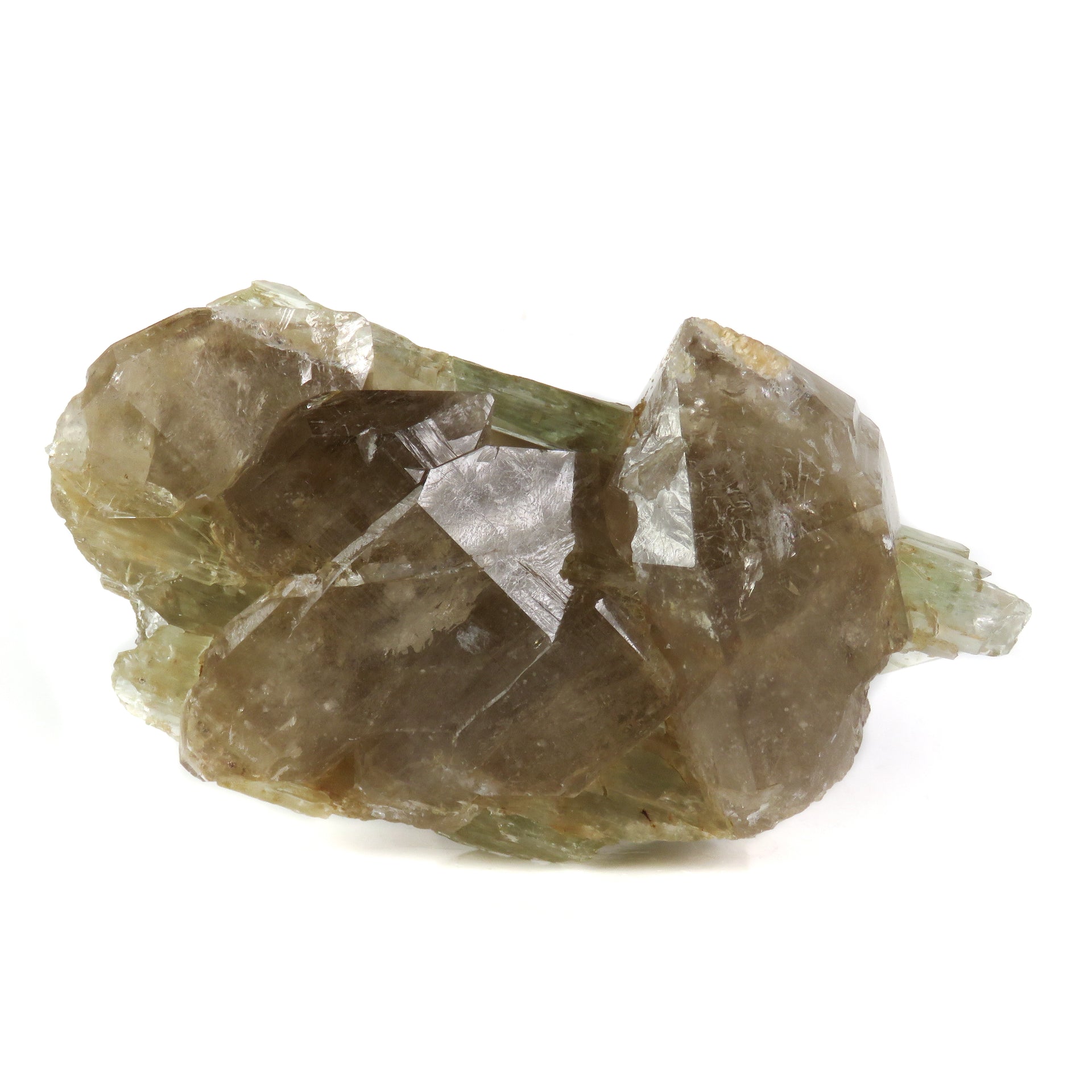
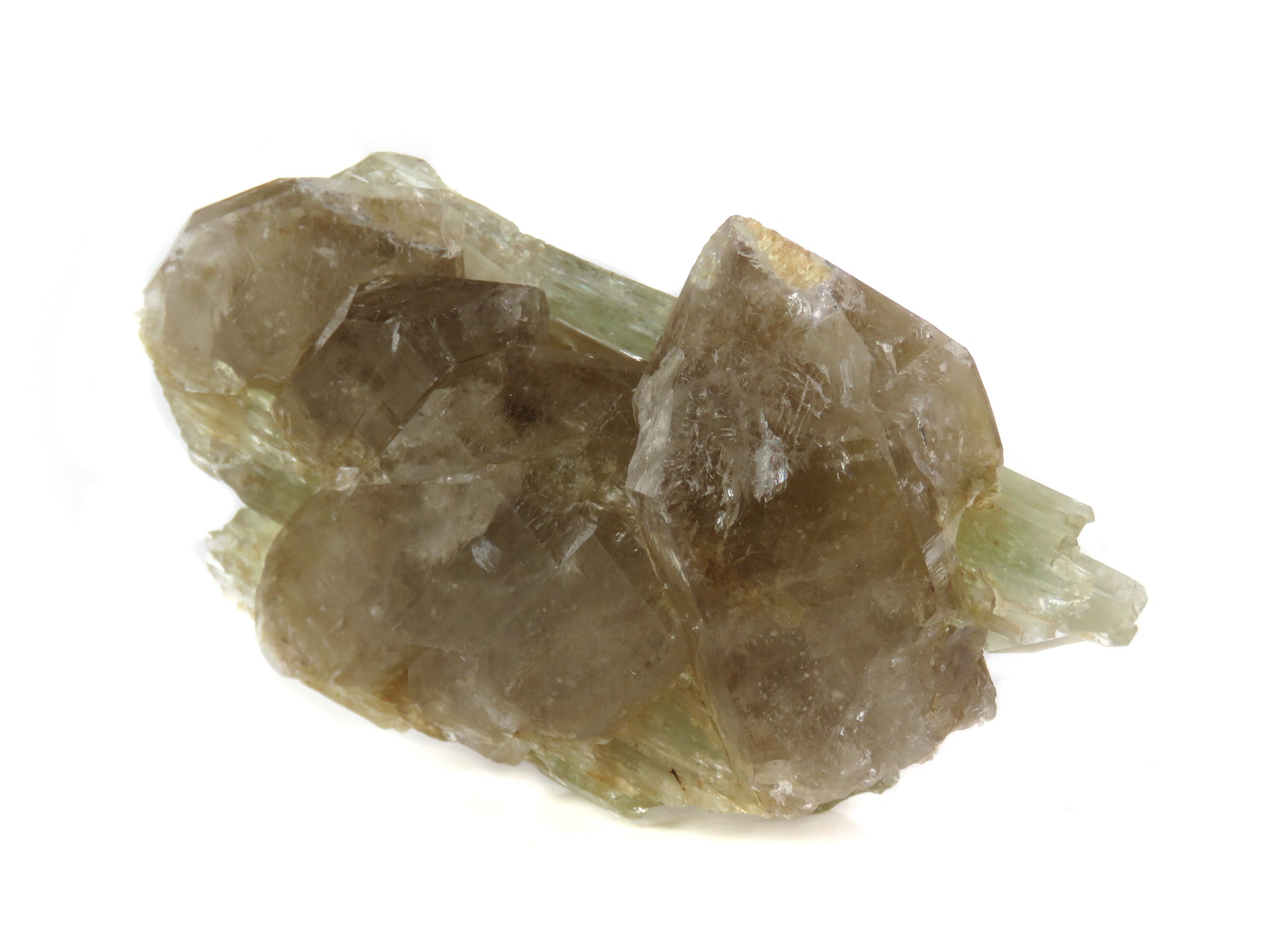
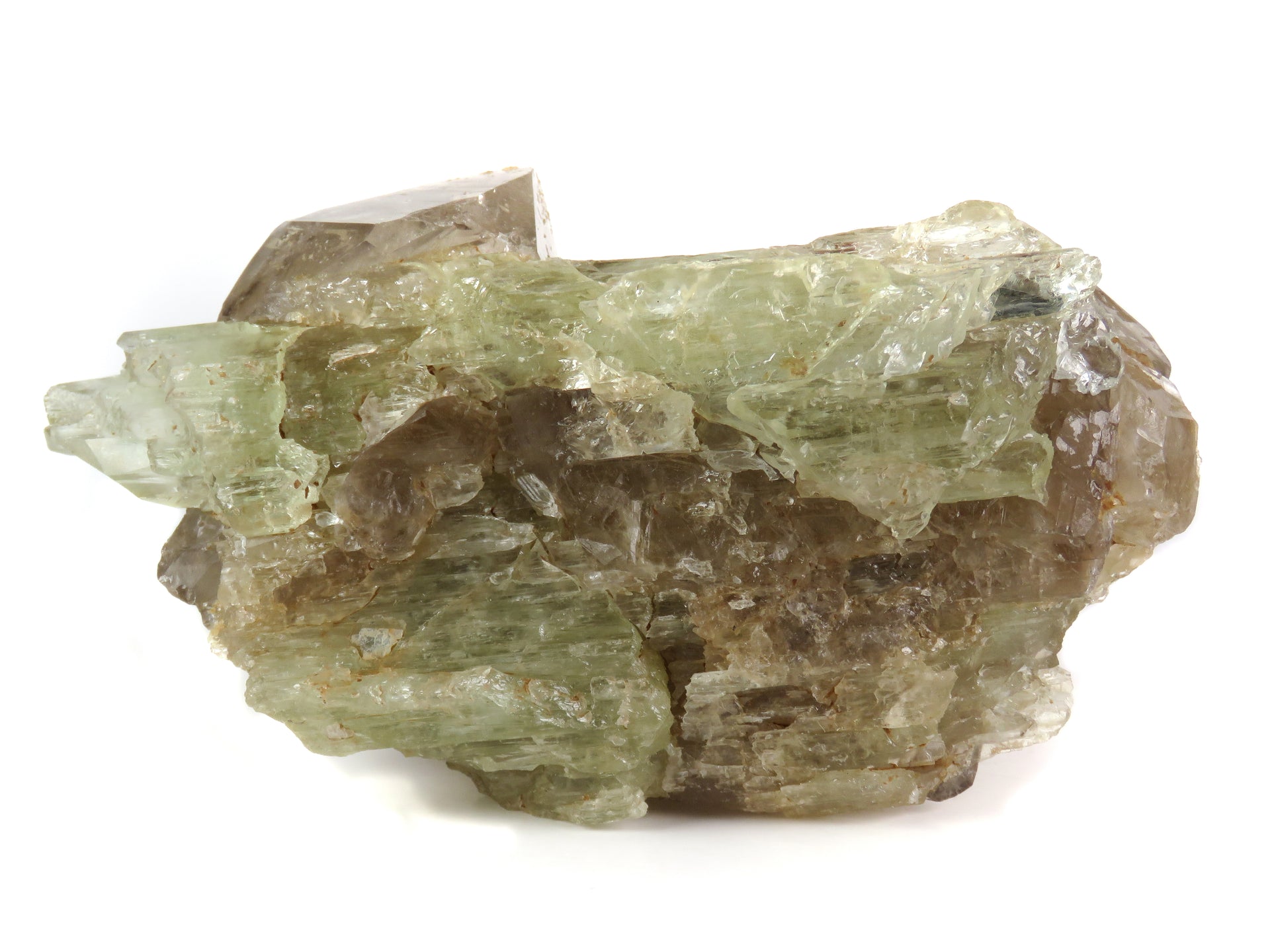
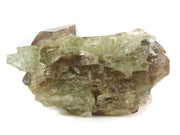
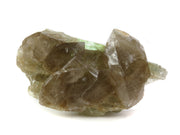
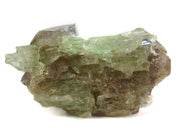
SMOKY QUARTZ ON TRIPHANE
ABOUT THE SPECIMEN
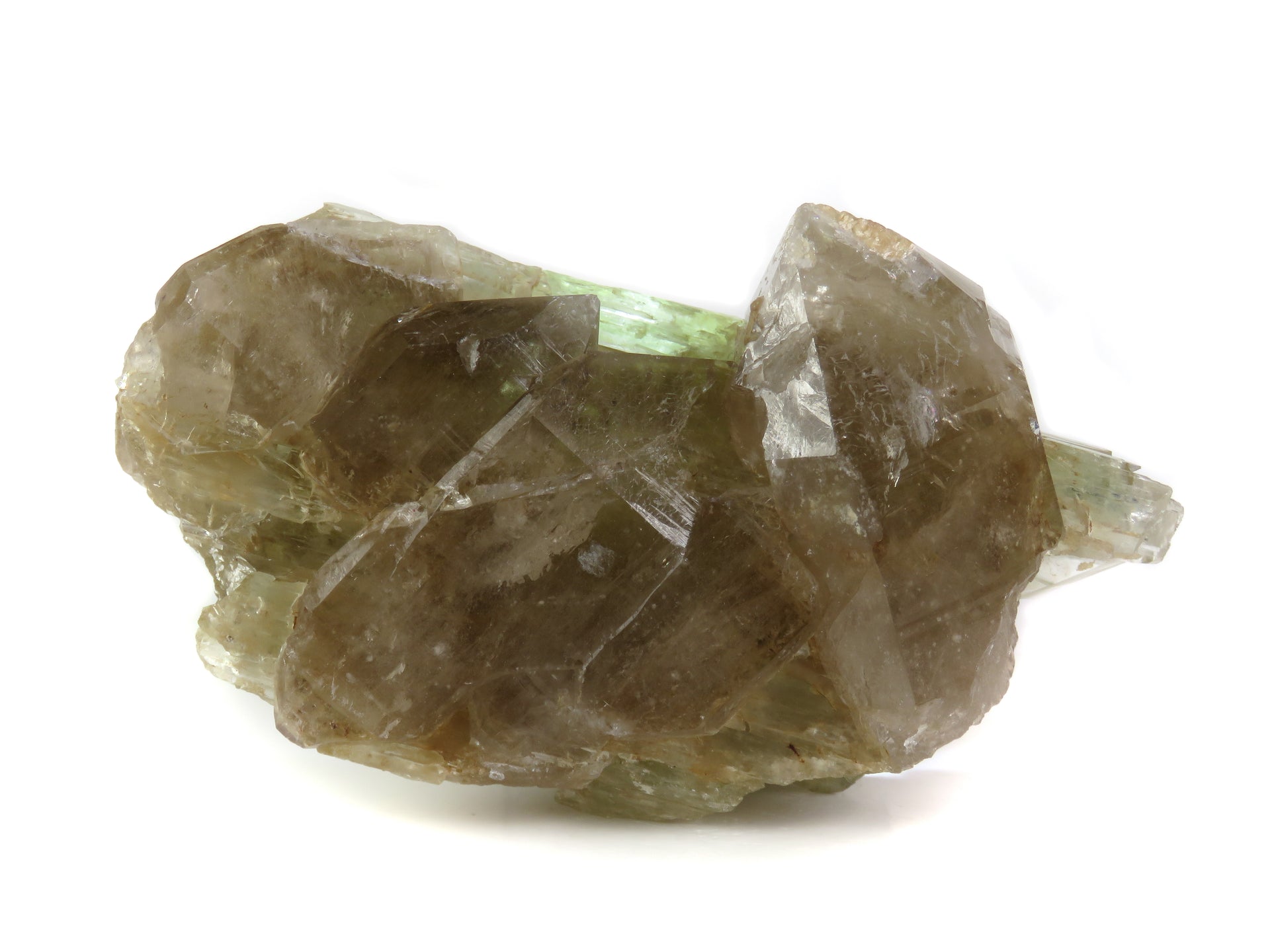
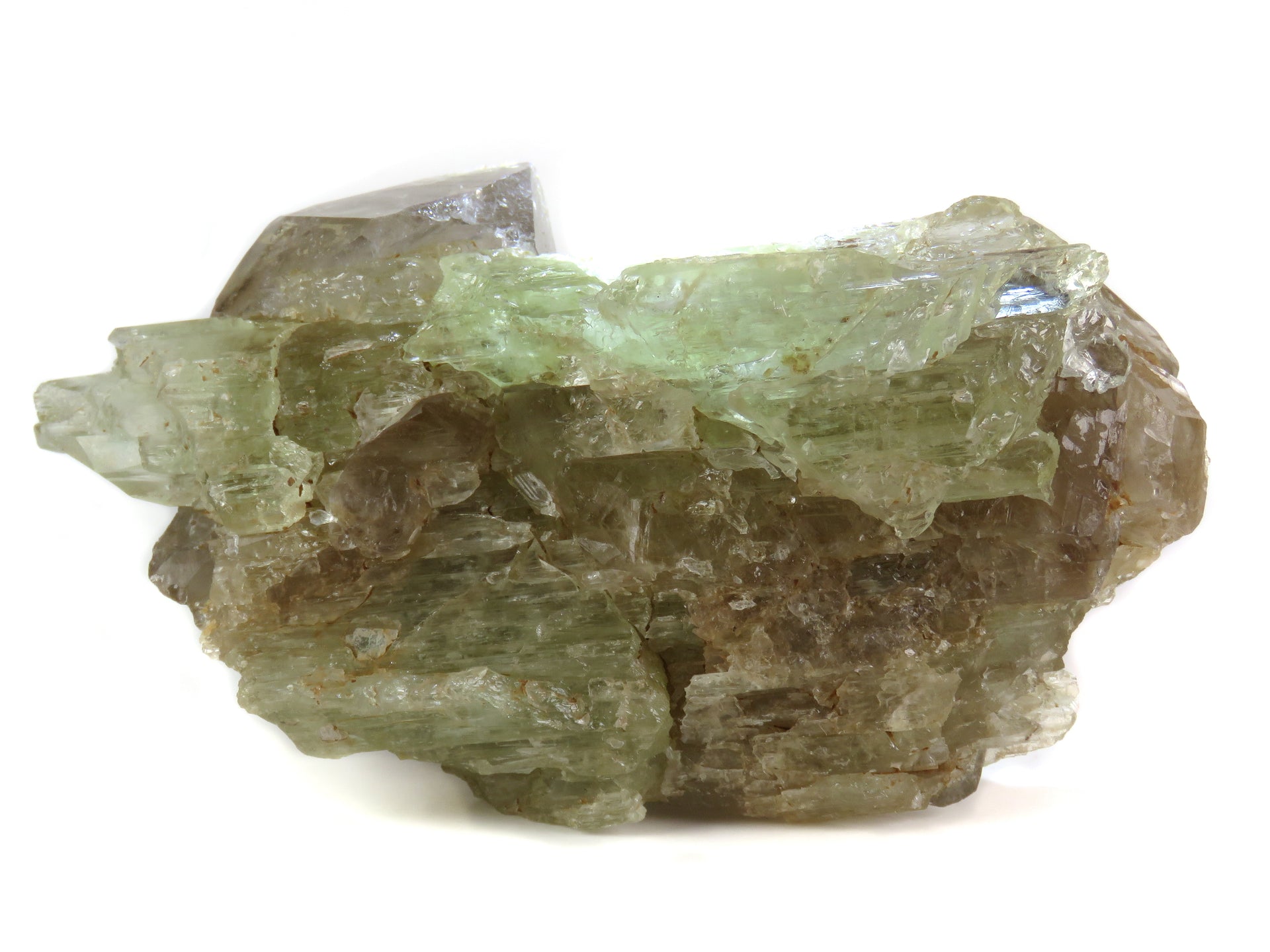
Fascinating combo piece, with a grouping of smoky quartz crystals grown right atop a large crystal of spodumene var. triphane! The triphane has a vivid yellow-green coloration with sharp terminations, and the quartz has such high clarity in places that it allows one to see the triphane right behind it! It can be well displayed from every angle, and is a marvelous example of a unique combination that is normally seen in much lower quality. This comes from a lesser known locality, for which Mindat doesn't even have any photos listed.
VIDEO
MORE INFO
Shamakat is one of several Li-Sn-Ta-Be-Cs pegmatite fields within the Laghman granitoid complex - a consequence of multistage fractional crystallization of lithium-bearing leucogranite magma intruded during the Oligocene collision of the Indian and Eurasian plates into Proterozoic schists and gneisses. Rare-metal pegmatites are confined to the third and most evolved intrusive phase of the complex, where open miarolitic cavities concentrated the residual lithium-rich fluids from which triphane - the yellow to greenish-yellow variety of spodumene, its color linked to trace iron and natural irradiation - crystallized alongside smoky quartz, albite, and pollucite. Spodumene crystals from Laghman are classically elongated clinoprisms heavily striated along the principal axis, and doubly terminated floaters are the most coveted form; smoky quartz here tends toward short, deeply phantomed prisms with a distinctly warm brown tone rather than the cooler grays typical of Alpine material. The combination of gemmy triphane and smoky quartz as a matrix piece is rarer than the floater crystals that dominate the market. Access has been severely disrupted by decades of conflict and subsequent export restrictions under Taliban governance, meaning supply has been erratic since the early 2000s and new material reaching Western dealers is difficult to authenticate as genuinely recent extraction versus old-stock.